First Impressions from a Hardware Engineer: I Bought Every Smart Ring to Find the Best. The Ultimate 2026 Guide
Testing the top 4 smart ring brands: Oura, Circular, Ultrahuman, and RingConn. A Complete, Unfiltered, Fact-Based Evaluation with Data Comparisons, Testing, and Real Insights.

I’ve spent my entire career in engineering and held hardware product-owner roles at major tech firms. What I enjoy most is taking complex systems and translating them into clear, practical insights whether through concise articles, in-depth product reviews or broader theories about how technology shapes human progress.
In a recent article:
I explored one of the future trends I believe in most: the shift toward full health autonomy.
To test this theory properly, I used AI to map the full landscape of predictive health technologies. And once I saw how many emerging solutions claimed to support proactive, day-to-day health management, I decided to go all-in. Instead of staying at the surface, I began purchasing every category of product that looked genuinely the future of predictive health. My goal was simple: if a device or system claimed it could help you take control of your health before problems appear, I wanted to test it myself. That included advanced probiotics, at-home blood tests, continuous glucose monitors (CGMs), and the newest generation of wearables designed to track recovery, stress, biomarkers and early warning signals.
Because of my background in hardware development, I’m able to evaluate devices not only from a user perspective but also from an engineering point of view. That’s why this new series will include frequent updates reviewing the best health and recovery trackers available today, with real testing, long-term comparisons and transparent analysis.
My goal is simple: deliver the clearest, most detailed and most balanced evaluations you can find in 2026 without the outdated blog posts, old Reddit threads or biased YouTube reviews that still dominate search results.
Let’s begin.
1. Why and How I Started Testing The Top 4 Smart Rings
During my search for the best health-tracking wearable products, I encountered a wave of information and contradictory opinions.
The space is incredibly noisy. It’s often unclear what’s real:
• Is a device truly shipping or still in pre-sales?
• Is the company established or brand new?
• Are negative reviews based on new or old versions?
• Is the product legitimate or potentially a scam?
Trying to make sense of this chaos was nearly impossible.
So I created my own evaluation criteria with the help of AI. I wanted to measure each device on:
• accuracy
• long-term reliability
• app usability
• insights that actually matter
• battery performance
• comfort and ergonomics
• unique features
• real-world user experience
I quickly realized that smart rings have become one of the most exciting and fast-evolving categories in modern wearables. With AI, I found out that every brand had its own strengths, weaknesses and unique singularity. No single device stood out as the “perfect” choice and picking just one was impossible.
So I decided to buy every major smart ring myself that looked promising:
• Oura Ring 4
• Ultrahuman Ring Air
• RingConn Gen 2
• Circular Ring 2
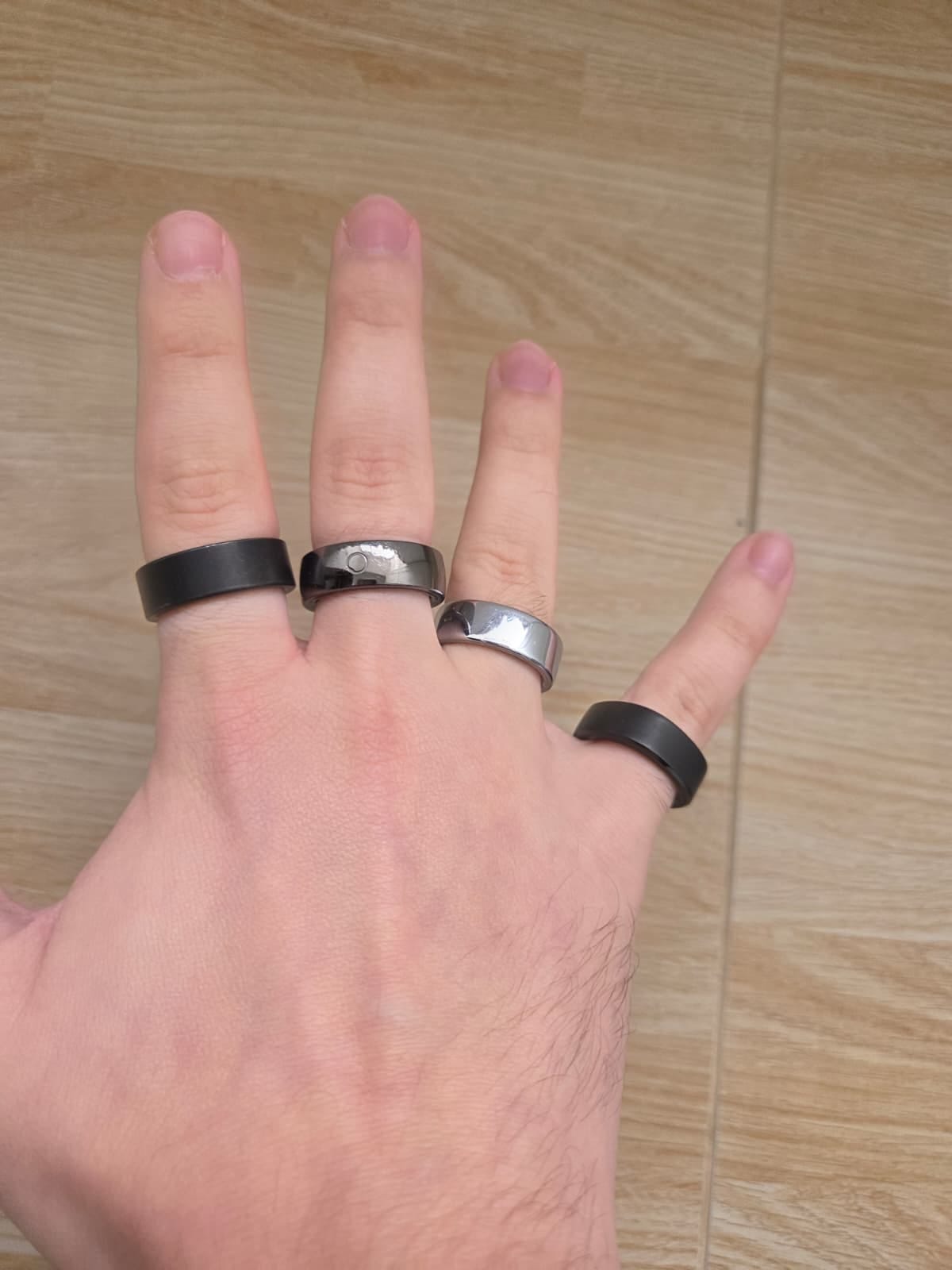
Disclaimer: Beyond these, I searched several other brands generating attention:
• Samsung Galaxy Ring
• Luna Ring
• Helio Ring
I also explored non-ring devices like the upcoming Lumia 2 smart earrings, which I will test as soon as they are shipping.
No brand sent me hardware. No one sponsored this article.
2. What Each Ring Promises and Why I Bought Them
Here’s the factual overview based on publicly available sources.
Oura Ring 4
• Excellent sleep-analysis accuracy, consistently rated among the best in the category
• Beautiful, polished app and the most mature and established company
• Largest user community with strong third-party integrations and a well-developed ecosystem
• Requires a monthly subscription.
• Features evolve more slowly compared to newer competitors
(Source: Oura documentation + wearable reviews TechRadar and Wareable)
Ultrahuman Ring Air
• Strong emphasis on metabolic health
• No mandatory subscription, although some advanced features are offered as optional paid add-ons
• A high feature-to-price ratio that delivers strong overall value
• Some uncertainty around long-term regulatory compliance and market availability in the US
(Source: TechRadar, Medium comparative tests)
Circular Ring 2
• The only smart ring offering AFib detection through ECG as of February 2026
• No subscription fees, making long-term ownership more cost-effective
• Built-in AI-driven insights at the core of the user experience
• A strong feature-to-value ratio
(Source: Circular documentation, Techlicious, CES 2025 coverage)
RingConn Gen 2
• The most affordable option among leading smart rings
• Excellent battery life
• Reliable product
• Limited features but app experience is still evolving
(Source: Wareable and Medium.)
As you can see, on the surface these smart rings look similar but the differences in features, accuracy, philosophy and long-term value may be significant. That’s why I couldn’t decide. Each one offers something unique, and no single device checked every box for me. So instead of choosing one, I decided to compare them head-to-head.
This review will evaluate every ring based purely on real-world testing and user experience not branding/marketing claims, press, hype, or rumors.
3. Sizing
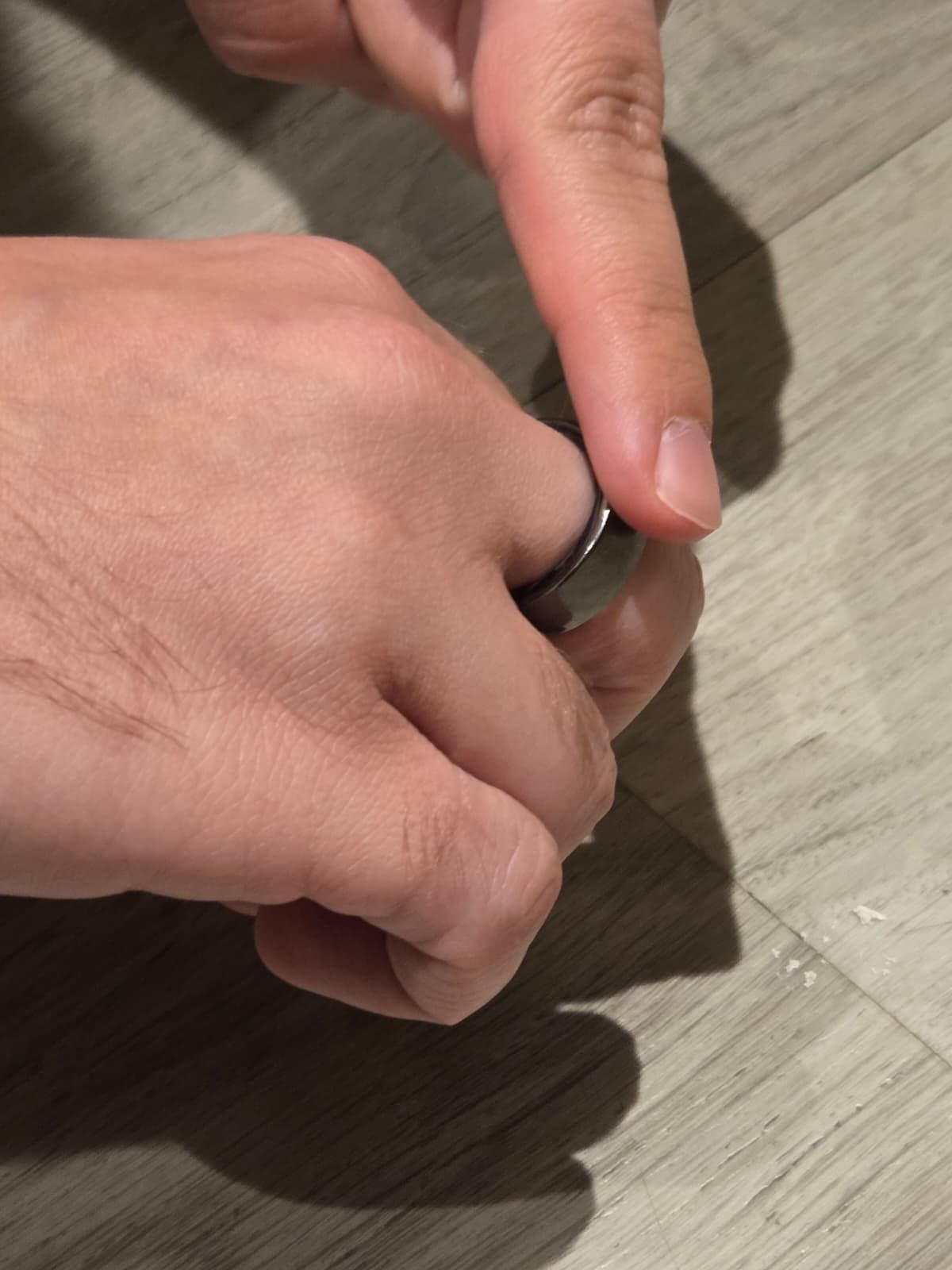
Honestly, I wasn’t used to wearing rings before this. I had no idea what my finger sizes were, and I didn’t even know which hand or finger I should use. Even when you think you know your usual US ring size, some brands warn you upfront. For example, RingConn explicitly states “that their sizing differs from standard US sizes and strongly recommends using their free sizing kit.”
To make things more confusing, each company offers a completely different sizing method:
• traditional finger-size charts
• 3D-printable sizing tools
• AI sizing systems (I saw that at some point Circular offered one)
I was overwhelmed at first, but after going through all the brands, it became clear that ordering a physical sizing kit is the most reliable method and common to all.
So I purchased each ring with its official sizing kit.
What is a Sizing Kit?
A sizing kit is a package containing plastic rings in every size, allowing you to test them on your fingers.
All manufacturers recommend:
• wearing the plastic ring long enough to ensure comfort for 24-48 hours.
• that the ring stays securely in place on your finger even when moving your hand vigorously (selecting the size that feels snug but not tight).
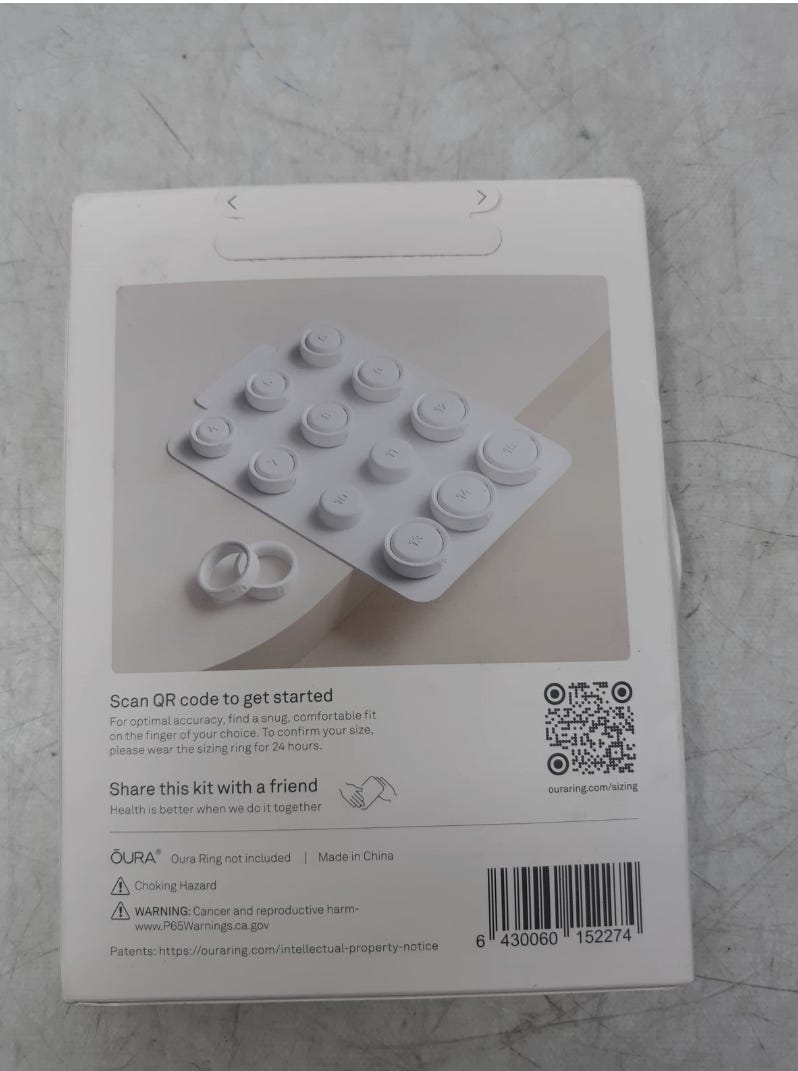
In general, most brands also suggest wearing the ring on one of the three middle fingers, and on the non dominant hand where readings tend to be the most stable.
Once you find your correct size, you typically need to find a special link sent in your order confirmation email and validate the final size so the company can ship your ring.
One important detail: sizing kits cannot be returned. So you can either keep them, give them to a friend, or resell them on a second-hand platform. I noticed several sizing kits available on Amazon and eBay. It would be nice to find a solution around recycling. The AI digital sizing guide of Circular would have fixed this spoil issue.
Personally, my correct size ended up being either an 8 or 9, depending on the brand.
4. Ordering & Shipping
I live in the US and here is the exact cost I paid for each smart ring, along with the delivery times for both the sizing kit and the final ring. These timelines only reflect my experience in the US.
Oura Ring 4 (Silver Edition)
Price breakdown: USD $349 + $34.03 Tax
Shipping: $15$
Subscription: $5.99/month or $69.9/year
Sizing kit: Free
Total price at purchase: $398.03
Price after 1 year: $467
Price after 2 years: $537
My delivery experience:
• Sizing kit arrived in 1 day
• The ring arrived 2 days after confirming my size
Circular Ring 2 (Obsidian Black Edition)
Price breakdown: USD $349 tax included
Shipping: Free
Sizing kit: $5
Total price: $354
My delivery experience:
• Sizing kit arrived in 5 days
• The ring arrived 5 days after size validation
Ultrahuman Ring Air (Raw Titanium)
Disclaimer: Ultrahuman is currently banned from importing or selling its smart rings in the United States due to IP litigation with Oura. I had to purchase my ring from another country.
Price breakdown: USD $349 + $34.03 Tax
Shipping: $25
Sizing kit: Free
PowerPlugs subscription: Optional
Total price: $408
My delivery experience:
• Sizing kit arrived in 3 days
• The ring arrived 12 days after size confirmation
RingConn Gen 2 (Matte Black Edition)
Price breakdown: USD $299 tax included
Shipping: Free
Sizing kit: Free
Total price: $299
My delivery experience:
• Sizing kit arrived in 3 days
• The ring arrived in 5 days total
5. Unboxing Experience, Build Quality, Comfort & Battery Performance
At the time of writing this article, I’ve tested each ring for roughly one week. Here is my detailed experience with unboxing, build quality, materials, accessories, battery life and day-to-day comfort for each of the four smart rings.
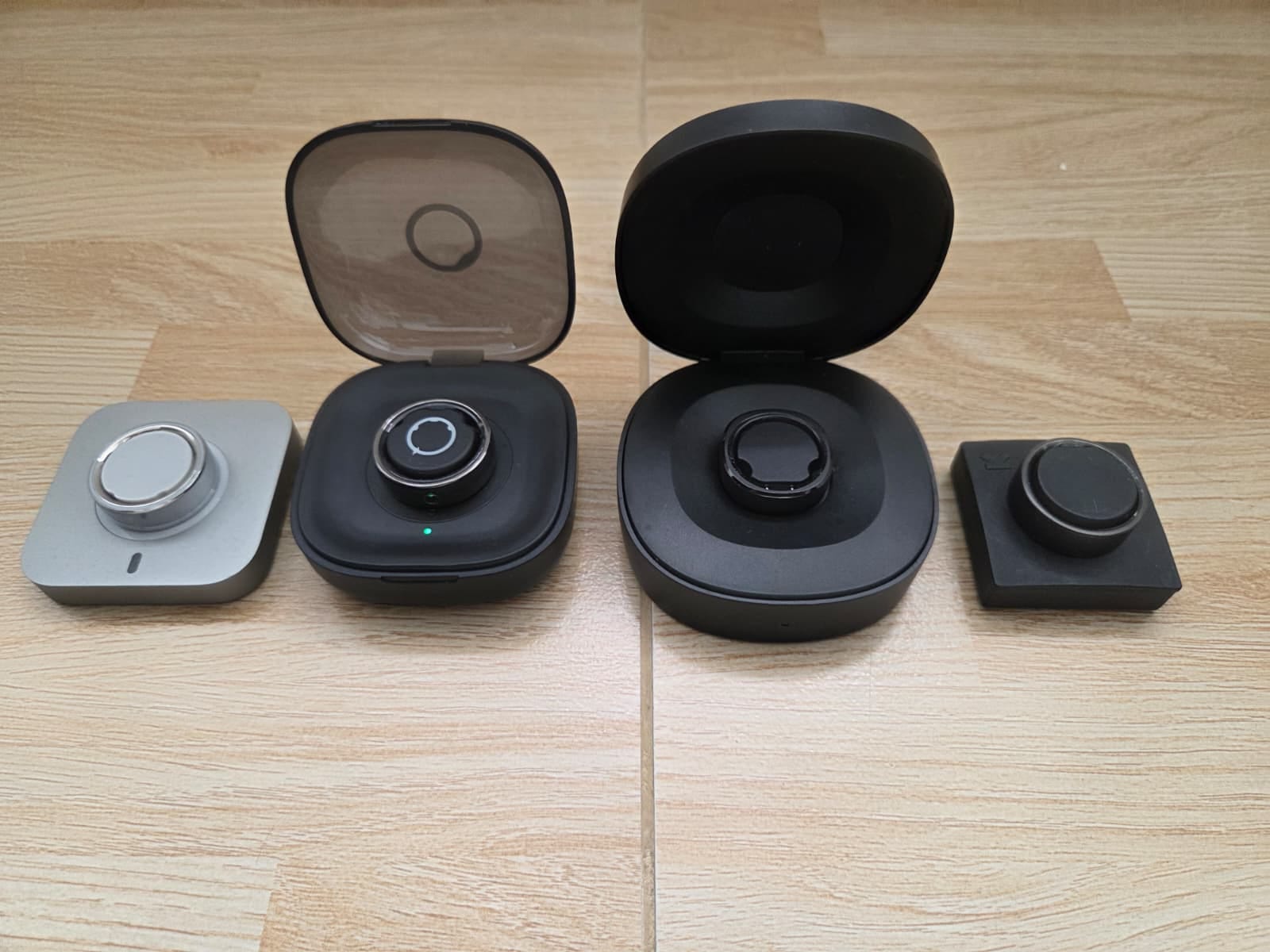
Oura Ring 4 - $537 all inclusive
The Oura Ring 4 delivers a premium unboxing experience, as the most established brand in the smart-ring category. The ring has a smooth, polished finish, feels lightweight, and visually resemblesjewelry as both the interior and exterior is made of Titanium. (Other rings below feature a transparent epoxy resin that showcases some elements of the electronics. As someone into tech, I love that too but I’m aware it can look different than a standard ring for some people)
Included in the box:
• Metallic charging dock
• USB-C charging cable
Thickness: 2.88mm for Titanium Models x Width: 7.9mm x Weight / 3.3g
If you're considering the Ceramic edition for its superior durability, keep in mind it has an advertised thickness of 3.51mm. I decided against it because of comfort concerns; at 2.88mm, my current ring is already the thickest among all 4 rings and represents my personal limit for daily comfort.
Battery Life: Oura advertises 5-8 days of battery life, I typically get 5 days on average with SpO2 tracking turned on. Note that you can disable this feature to extend the time between charges.
Circular Ring 2 (Obsidian Black edition) - $354 all inclusive
Circular uses a titanium build and the finish is refined. The interior is made of transparent epoxy resin that showcases some elements of the electronics. When worn, the ring remains virtually invisible from the top, only revealing its presence when viewed from the side. And that will also be true for Ringconn and Ultrahuman.
The Obsidian Black coating is sleek. Compared to its competitors, it offers a more elegant aesthetic.
Included in the box:
• Plastic but lightweight portable charging case (one of the standout accessories)
• USB-C charging cable
• Cleaning cloth
Thickness: 2.55mm x Width: 7.8mm / Weight: 3g
Battery Life: Circular has 2 different battery mode that you can switch to; Performance mode that is advertised at 4-5 days and Power mode that is advertise at 7-8 days. I get around 4 days in Performance mode. And I get around 5 days in Power mode. The difference lies in the frequency of data points tracked throughout the day. In Performance mode, I get a reading every 2 to 5 minutes on average, whereas Power mode only records my heart rate every 30 minutes.
Ultrahuman Ring Air (Raw Titanium edition) - $408 all inclusive
The Ultrahuman Ring has a sporty design and feels a bit less solid than the other rings. It still comfortable enough for all-day wear.
Included in the box:
• Metallic charging dock
• USB-C charging cable
Thickness: 2.45mm x Width: 8.1mm / Weight: 2.4g
Battery Life: Ultrahuman has two power modes; Chill Mode which xtends battery life by up to 35% and Turbo Mode for all-day tracking that is advertised to lasts 4–6 days. I get 2.5 days in Turbo Mode and 4 days on Chill Mode.
RingConn Gen 2 (Matte Black edition) - $299 all inclusive
RingConn offers the most minimalistic and lightweight design. In my experience, it was the most comfortable ring for long-term wear. The matte black finish looks clean.
Included in the box:
• Metallic portable charging case (heavier than Circular’s but feels very solid)
• USB-C charging cable
Thickness: 2.00mm x Width: 6.8mm / Weight: 2.5g
Battery Life: Official specs list 10–12 days of battery life on a single charge. I get 7-8 days of battery life in average.
My Point Of View
Comfort is ultimately subjective, and all four rings can be worn 24/7 without much issue. However, there were noticeable differences:
Best all-day comfort: RingConn
Best premium feeling: Oura. But their hardware felt the least comfortable on my finger.
Most elegant design: Circular
Most sporty design: Ultrahuman
Two brands stood out for travel and convenience:
• Circular
• RingConn
because they both provide a portable charging case with its own embeded battery. This means you can extend battery life on the go without finding an outlet something I expect to appreciate even more while traveling.
Scratches?
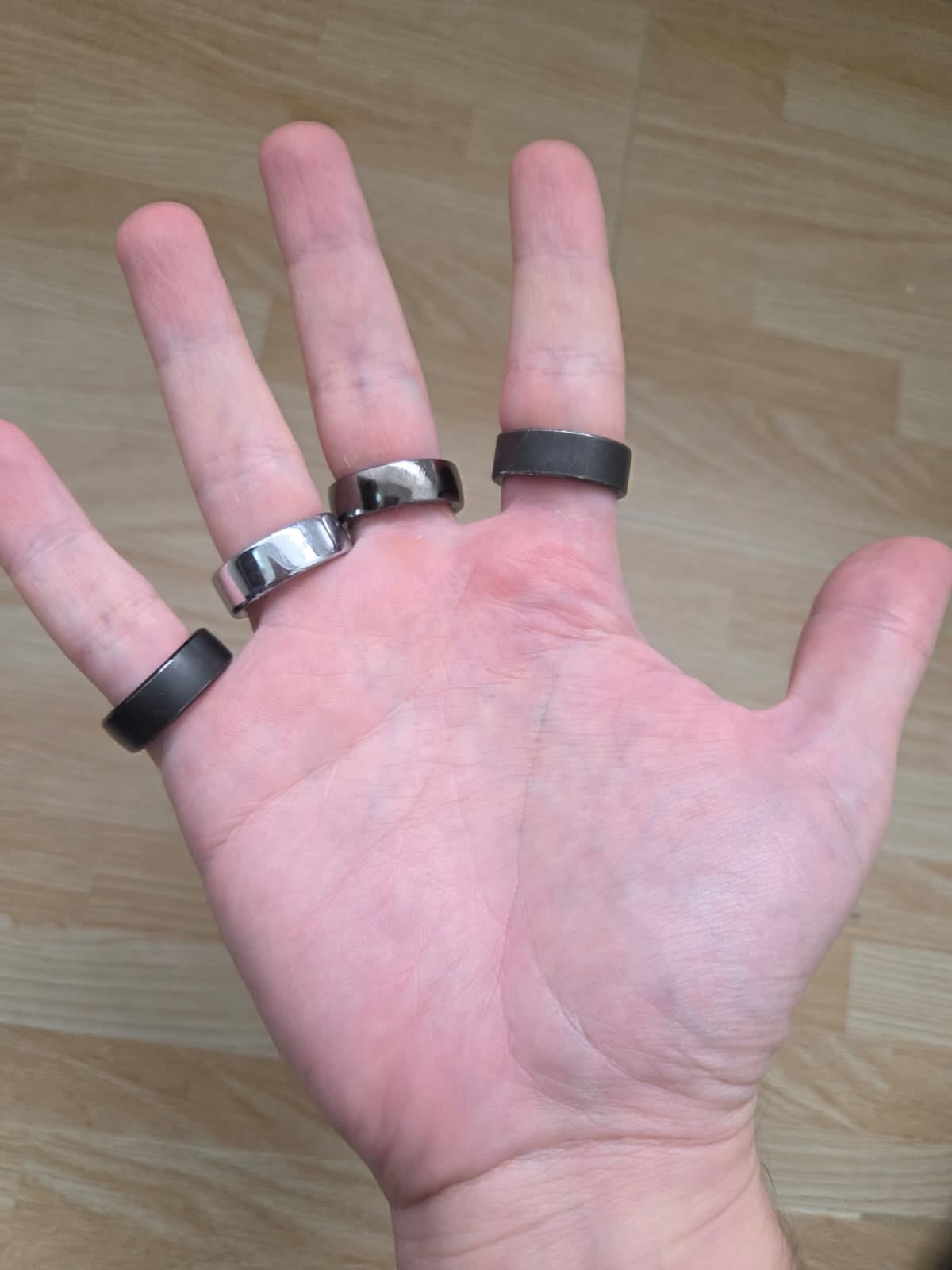
In terms of durability, I initially thought the coatings would hold up better, but after a week of real-world use, every ring showed small scratches. Ultrahuman got most scratches. Not enough to be noticeable from a distance, but worth mentioning for consumers who prioritize a perfect finish.
6. Sensor Technology, Core Tracking & Features
All smart rings rely on the same core set of sensors:
• PPG sensors (red, green, and infrared LEDs)
These optical sensors shine light into the skin to measure blood-flow patterns. From this, rings derive heart-based metrics such as heart rate, HRV (during sleep), SpO₂, and stress indicators.
• 3–6 axis accelerometers
Used to detect movement, it helps derive steps, sleep motion, activity intensity, automatic activity recognition...
• Temperature sensor
Measures skin temperature at the finger to help interpret sleep quality, recovery, illness signals and women’s health patterns.
A Key Difference Worth Highlighting
Circular Ring 2 is currently the only smart ring with electrical heart monitoring through a single-lead ECG sensor in addition to these core sensors. This matters for people who want deeper cardiac insights because ECG technology measures the electrical activity of the heart directly the same type of signal used in medical environments.
Circular also states that this ECG capability will support blood-pressure, which in theory would be more accurate than relying on optical PPG sensors alone.
On the other hand, Ultrahuman offers AFib detection using its PPG optical sensor. While this is technically possible, PPG-based arrhythmia detection is generally considered less reliable by health professionals. PPG sensors are more susceptible to motion noise and skin differences. In contrast, ECG is the clinical gold standard for arrhythmia assessment.
What These Rings Don’t Include
None of the rings provide:
• GPS
• EDA (electrodermal activity) sensors
• NFC payment capabilities
• Vibration capabilities
While Circular included haptic feedback in their Gen 1 ring, the feature was removed for the Gen 2 model. Interestingly, RingConn recently teased vibration capabilities for their upcoming Gen 3, and rumors suggest that Circular may reintroduce this feature in their Gen 3 too.
What All Rings Track
Vitals
Regardless of brand, all rings track a similar set of core health metrics:
• 24/7 Heart Rate
• Resting Heart Rate (RHR)
• Sleep HRV (Heart Rate Variability)
• Sleep Respiration Rate
• Skin Temperature
• Sleep SpO₂ (oxygen saturation)
• 24/7 Stress or strain indicators
Activity
Every ring also provides basic and advanced movement data:
• Activity intensity
• Daily movement
• Step count
• Calorie estimation
• Active minutes / move goals
VO₂ Estimates
Some rings support estimated VO₂ calculations, while others do not.
Sleep
All four rings include full sleep tracking, including:
• Sleep duration
• Sleep stages (Deep, REM, Light)
• Sleep latency (time to fall asleep)
• Sleep continuity / disturbances
Women’s Health
Each ring offers some form of women’s cycle tracking, but I’m not the right person to comment this.
Scores
All smart rings translate raw biometric data into easy-to-interpret scores:
• Sleep Score
• Recovery / Readiness / Energy Score
• Activity Score
Suprisingly, Circular does not use a traditional activity score. Instead, it provides other scores such as Wellness Score or Wake-Up Score.
Unique Features
While many core functions overlap, each smart ring offers specific features. Here are the standout capabilities:
Oura Ring 4
• Integration with Continuous Glucose Monitors (CGM) for metabolic & food insights
• Biological Age estimation, based on long-term trends and recovery patterns
Circular Ring 2
• Smart Alarm that wakes you at the optimal sleep stage with your phone alarm
• Medication reminders that let you create medication routine, get alerted and track them
• Vital alerts for abnormal HR, SpO₂ or recovery deviations
• Coherence breathing training for HRV optimization
• ECG recording with AFib detection, the only electrical heart-monitoring ring in this list
They also advertise blood pressure monitoring and glucose tracking as upcoming features; however, these are not yet available.
Ultrahuman Ring Air
• Biological Age estimation
• Social jetlag analysis to detect circadian rhythm disruption
• Screen time
• Sun exposure insights
RingConn Gen 2
• Sleep apnea monitoring (not FDA-cleared), using SpO₂ trends and respiratory irregularities
7. The Accuracy Question. And What You Can Get Wrong Online
Every single ring online gets accused of inaccuracies.
Here’s the truth you won’t often read: No device gives perfectly identical metrics.
Not Oura.
Not RingConn.
Not Ultrahuman.
Not Circular.
Even accross profesionnal devices you won’t have a single truth among medical devices.
Multiple independent analyses show this clearly.
Values differ because of:
• sensor placement
• finger size
• skin perfusion
• movement
• algorithms
I’ve read that even when wearing two rings of the exact same model on different fingers, the results don't always align.
But what matters is trend accuracy, not exact matching numbers.
Across all four devices, trends were consistent:
• high HRV days matched
• low recovery days matched
• high-stress events matched
• sleep disruptions matched
• steps matched with a difference of around 500/1000 steps per day
Minor numerical differences are expected in all wearables.
8. The App Experience: Who Wins and Why
After using all four rings for 1 week, here’s the breakdown:
Overall polish → Oura
First, I wanted to say; don’t even think you can use the Oura app without paying for the subscription. You’ll end up with the 3 only main scores and no details at all to see.
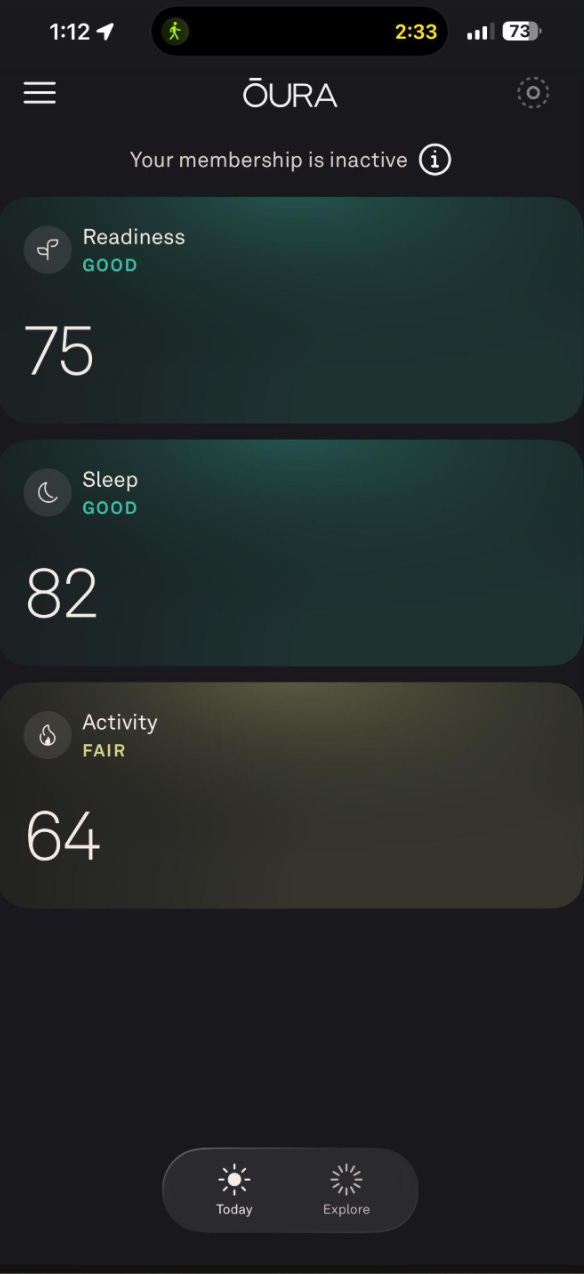
The subscription remains a real drawback. It’s not cheap, and I can’t imagine paying it indefinitely for the rest of my life and as you read this article you might understand that other brands offer equivalent or better value which makes it even harder to justify.
HOWEVER, the user interface of the app is by far the most elegant of all the rings I tested. It feels smooth, stable and incredibly polished. You can sense the $investment and maturity behind the product. Oura is clearly designed for users who want a fully reliable, Apple-like experience with minimal friction and clean visuals.
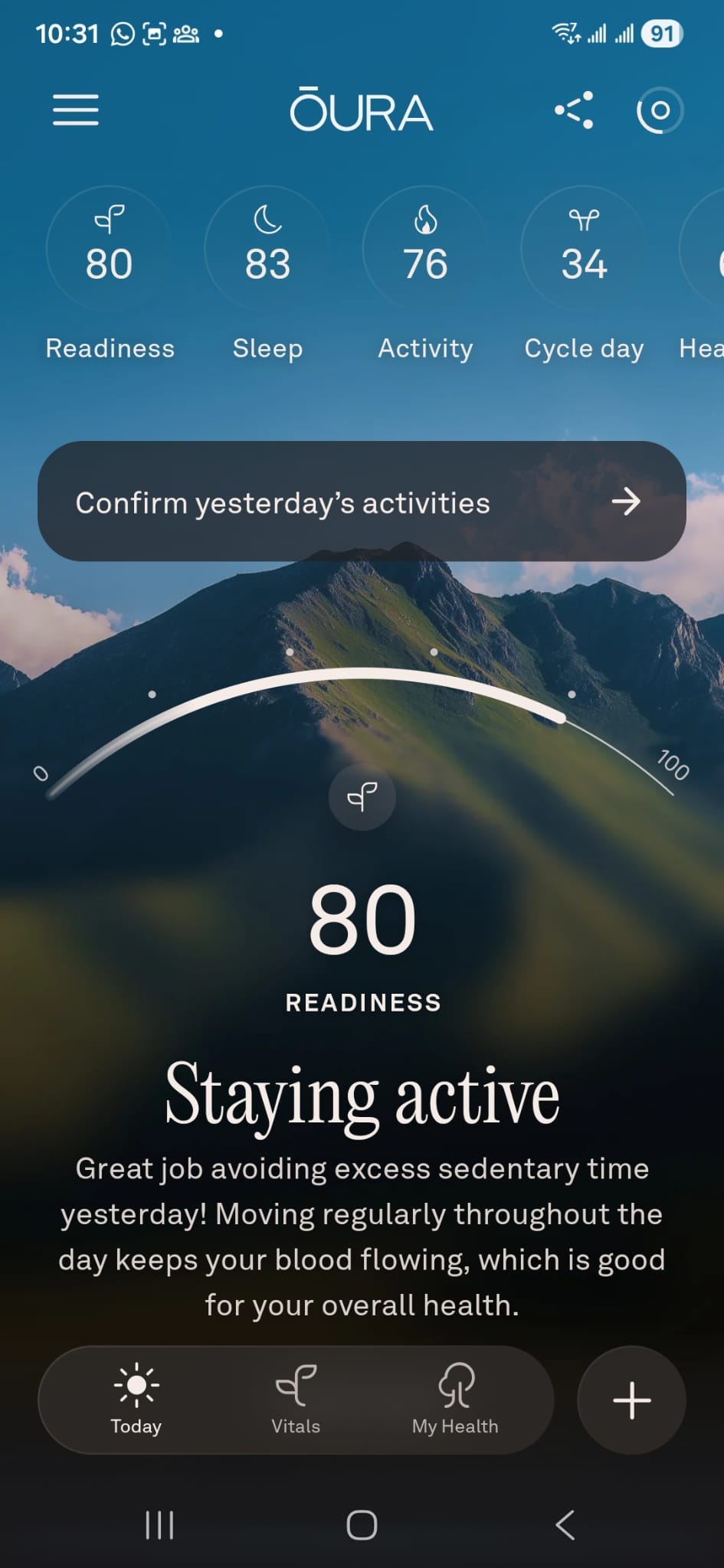
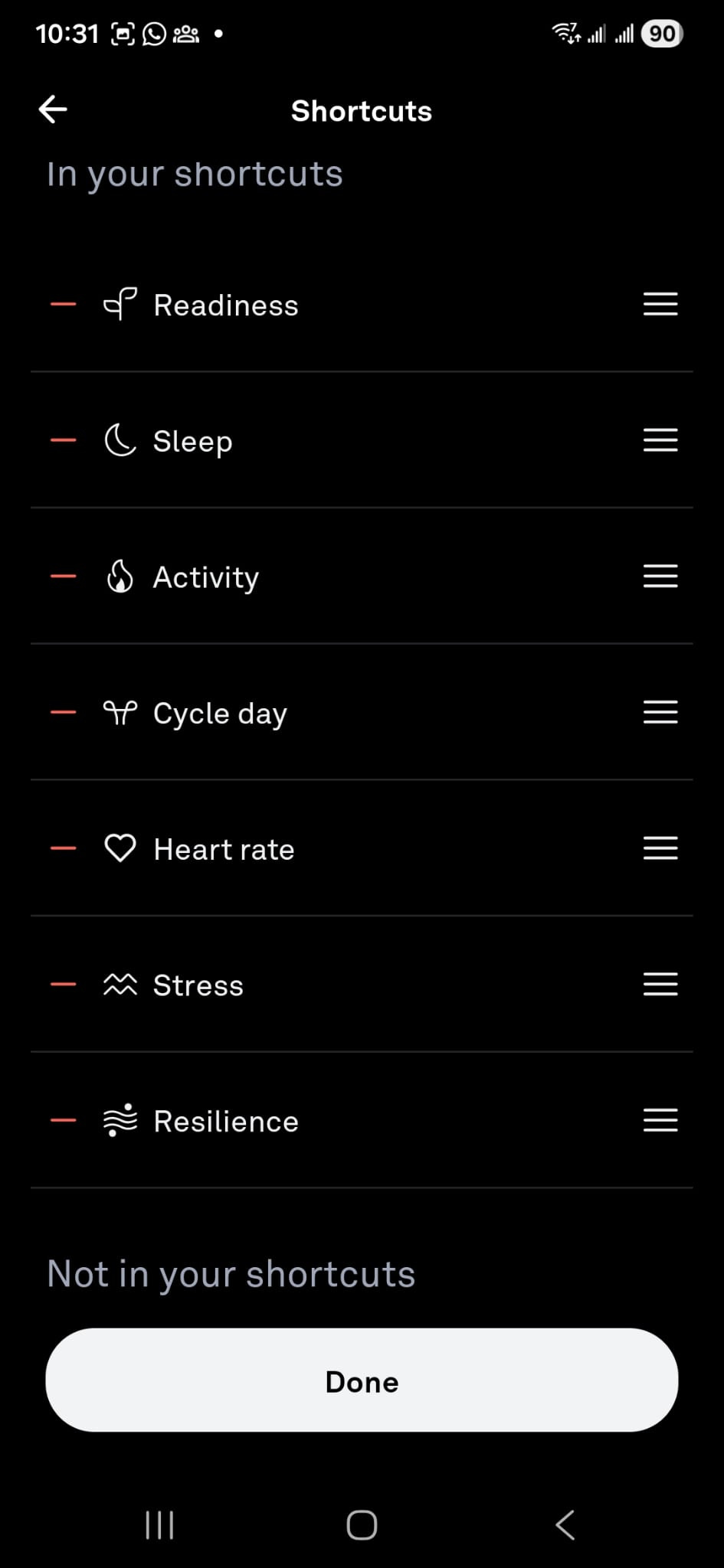
For my comparisons, Oura will become my baseline reference.
Most evolving & experimental → Circular Ring 2
The app is not as polished as Oura’s, and you can feel that the software is still evolving. There are some bugs here and there. But what striked me is that Circular experience is different than other rings. It targets a different type of user that are more looking into health prevention than wellness. It’s built for people who are looking for advanced health features with ECG capabilities, like AFib detection. It has no subscription fees and the AI-driven health insights are at the core of the experience.
What stands out the most is the number of features that other rings simply don’t offer. Circular calls these features “Circles,” and I counted 13 of them not including additional hidden tools in the app like the timer, leaderboards, and more. The platform feels ambitious, and you can sense the potential behind it. However, I have to say I experienced the hardest learning curve out of all four rings I tested. Information can be found across multiple tabs, features are scattered throughout the app, and it takes time to understand and start enjoying all the features and how everything connects.
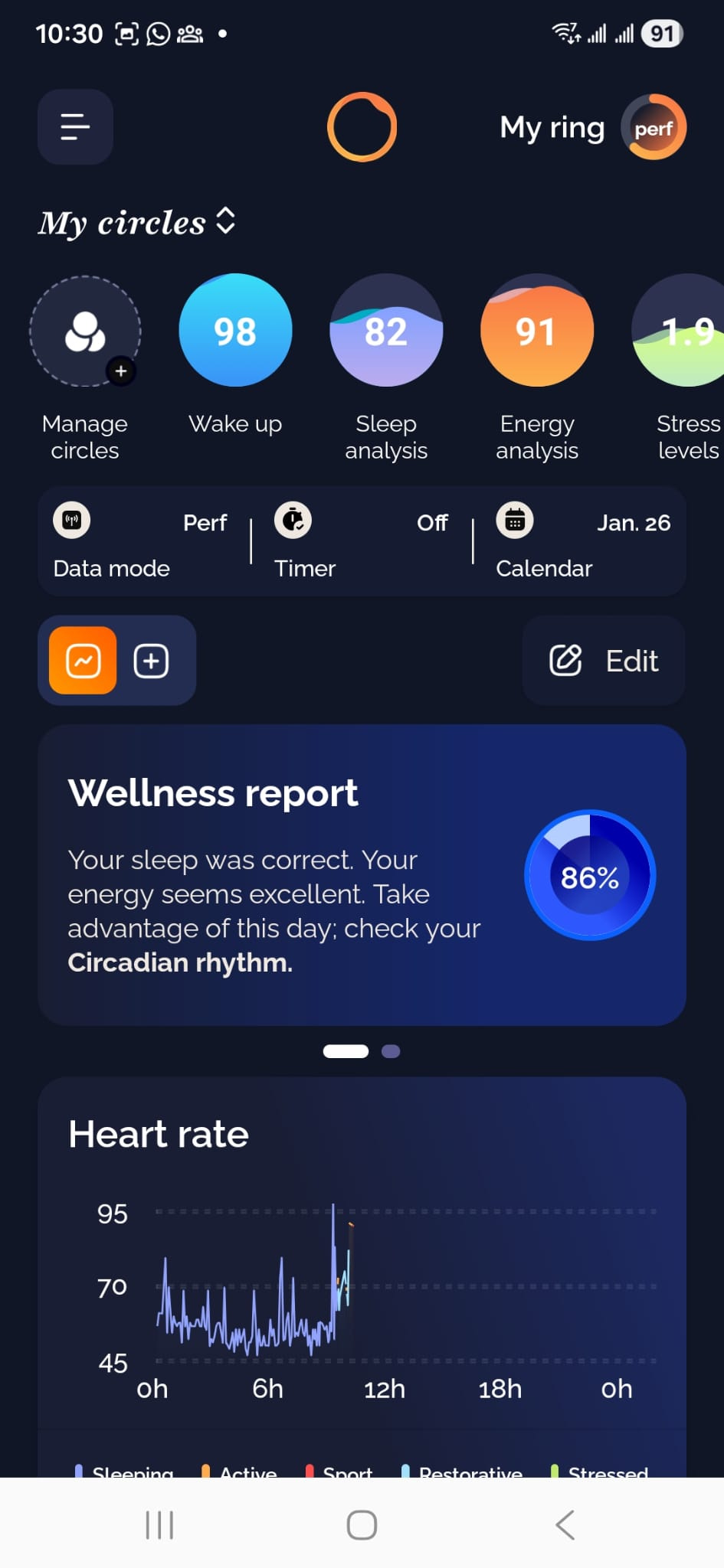
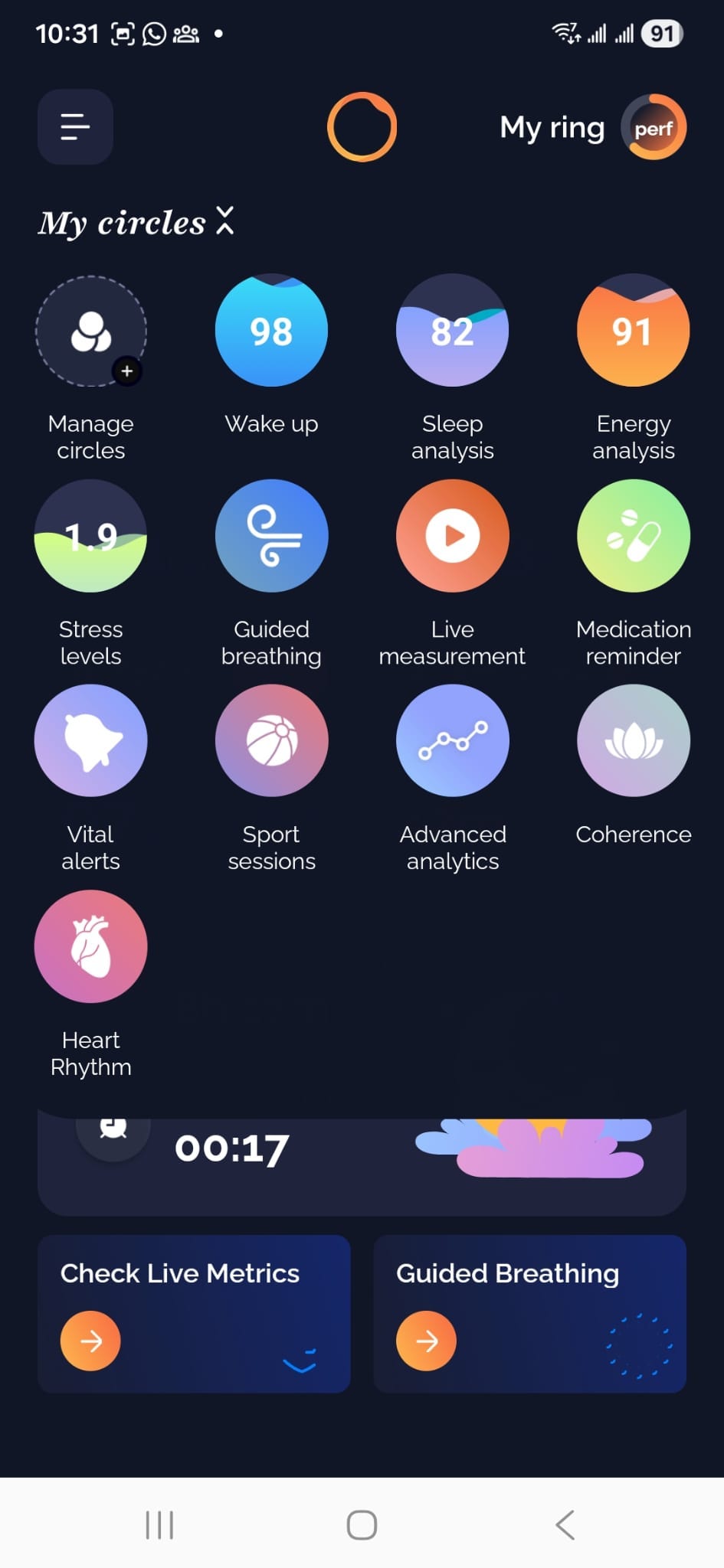
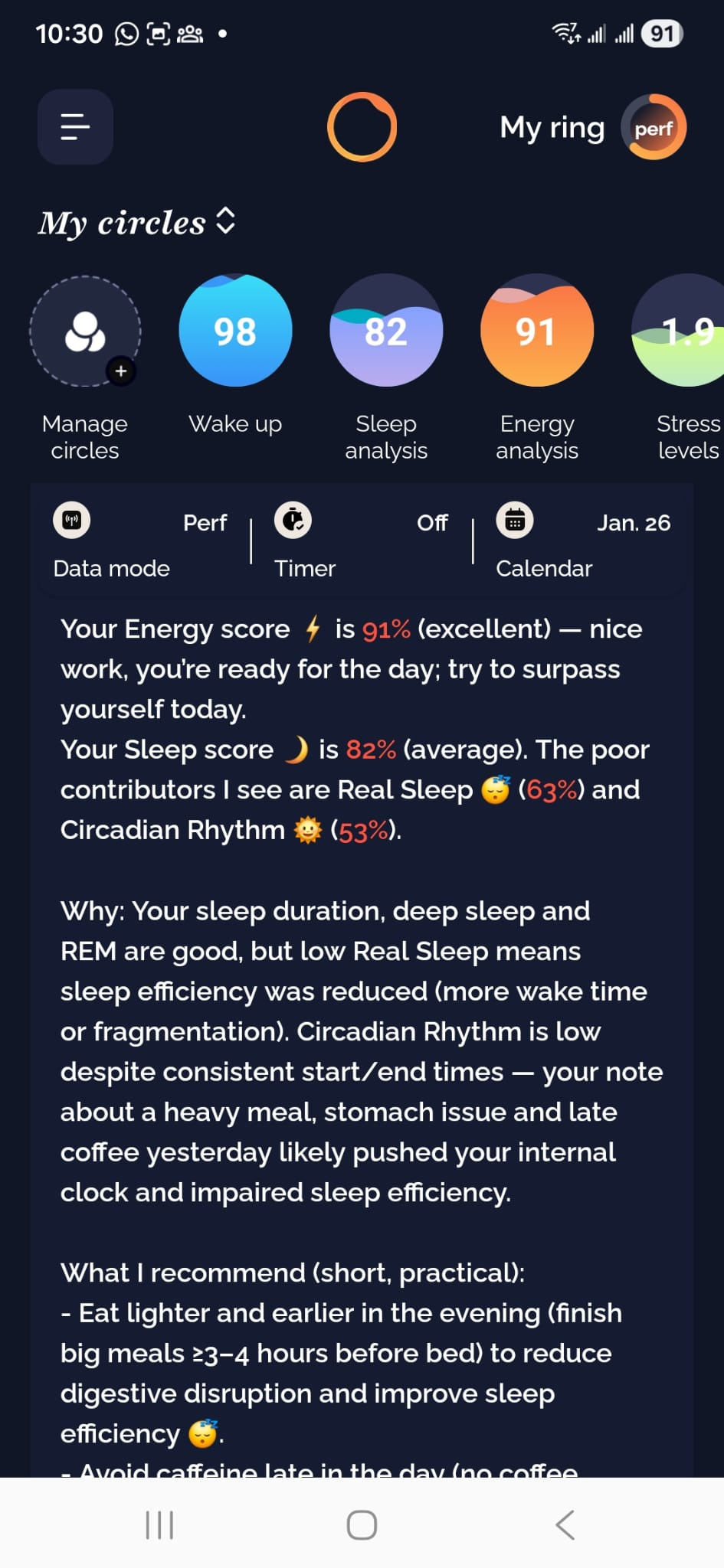
That said, their AI insights are, in my opinion, the best of the four rings. Circular has also publicly announced upcoming support for blood-pressure estimation and continuous glucose-monitoring compatibility, which, if executed well, could make this one of the most advanced health rings on the market. But from what I’ve seen it will be paid features.
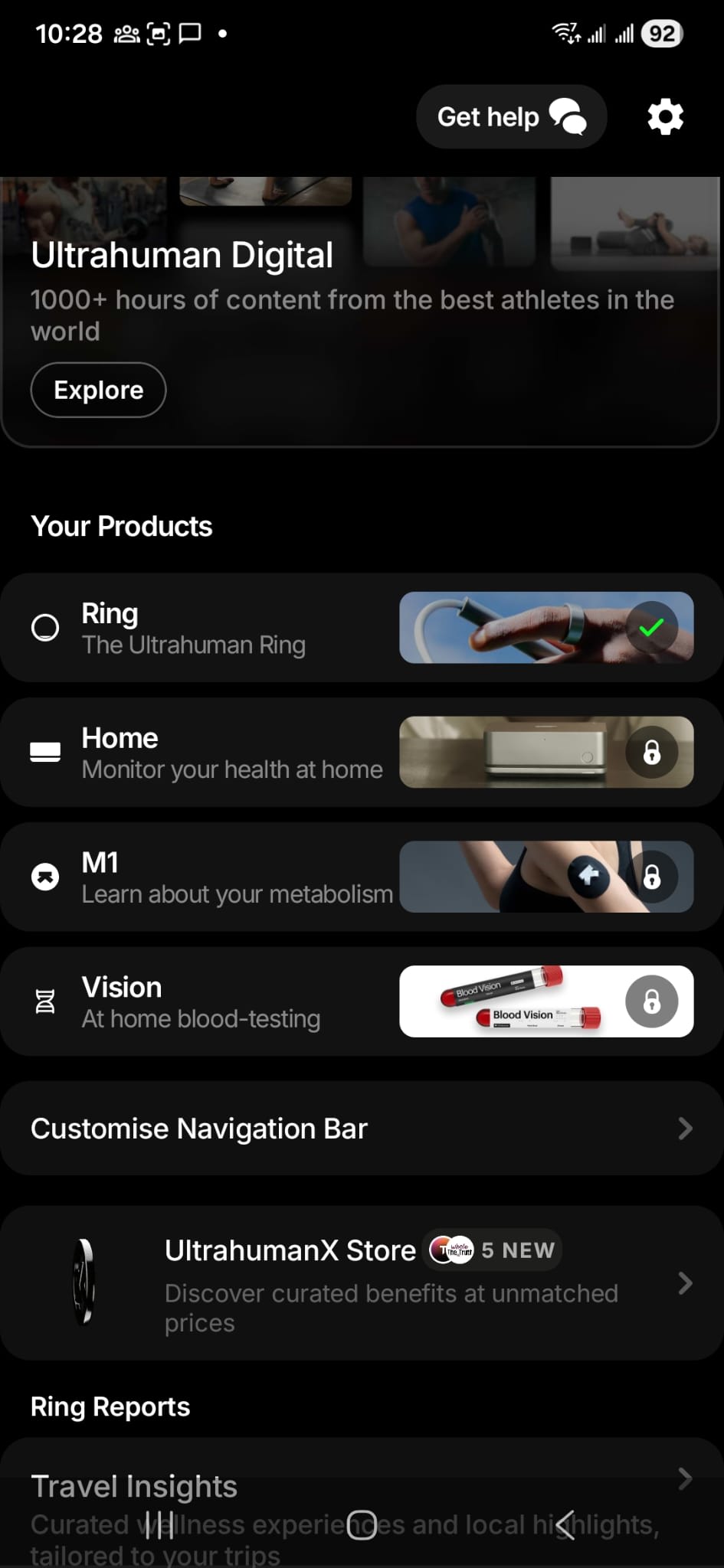
Most metabolic focus → Ultrahuman
Ultrahuman Ring Air is a great choice if you prioritize metabolic health, fasting routines and biohacking. Ultrahuman’s ecosystem is built around helping you understand how your lifestyle impacts your metabolism from stress levels to circadian rhythm alignment.
The experience with the Ultrahuman app is also quite different from the other rings. The ring analytics are only a small part of the app, and they live inside a single dedicated tab rather than being the core focus of the entire app. Much of the interface is designed to showcase Ultrahuman’s broader offerings including advanced metabolic programs, CGM plans, habit coaching and specialized performance tools.
If you’re someone who’s interested in combining multiple devices, this broader ecosystem can be extremely valuable. But if you're looking for an app that focuses primarily on the ring itself, the layout might feel a bit more compact compared to others.
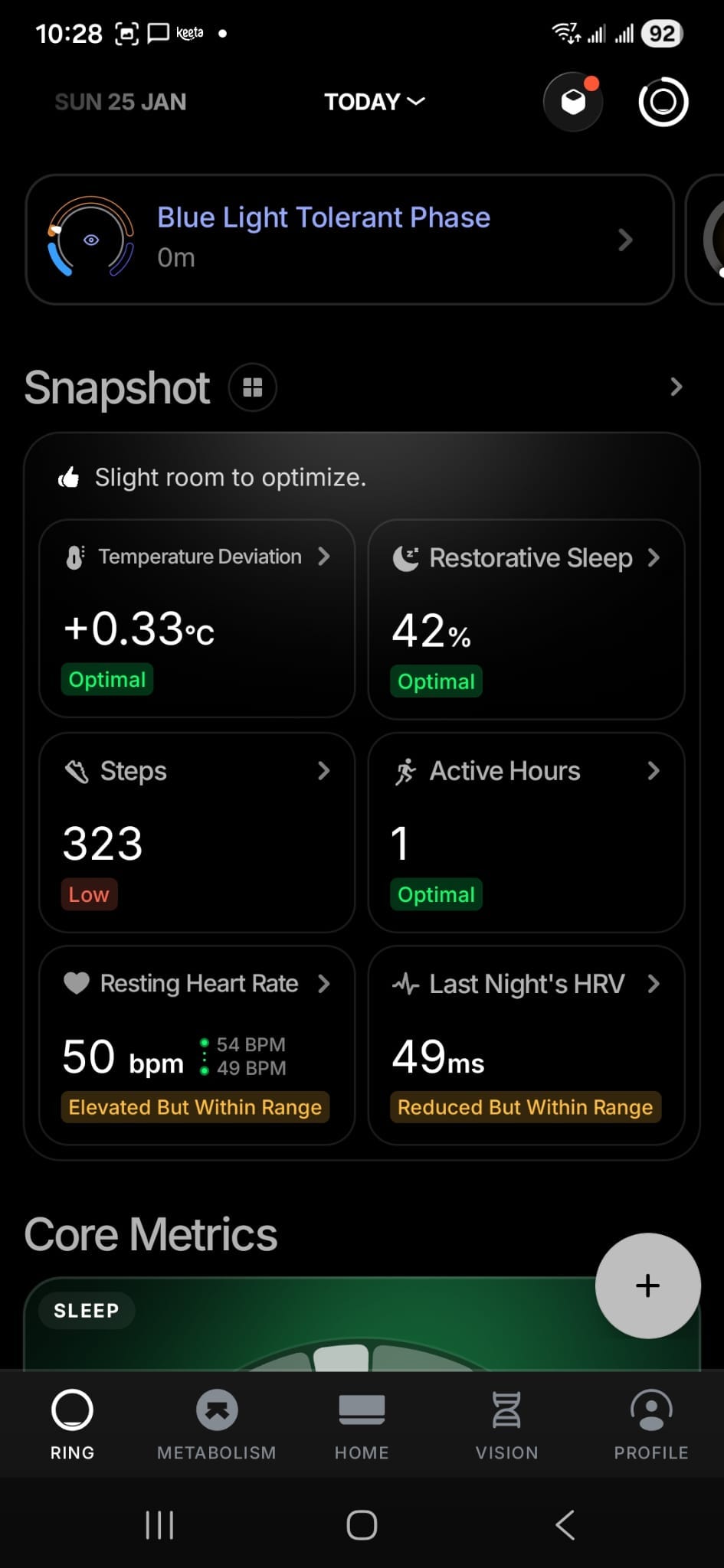
In terms of pricing, the Ultrahuman Ring itself does not require a subscription, but the company offers optional paid features called PowerPlugs.:
AFib Detection: $4.90 / month. Monitors for irregular heart rhythms while you sleep.
Cardio Adaptability: $2.90 / month. Provides a deep dive into how your heart responds to stress and recovery using Lorenz plots.
Cycle & Ovulation Pro: $3.99 / month. The basic cycle tracking is free, but the “Pro” version adds 90% accuracy for ovulation confirmation and detailed medical reports.
Tesla Sync: $6.90 / month. Automatically adjusts your Tesla’s cabin temperature and music based on your real-time recovery and stress scores.
Respiratory Health: $3.99 / month. Tracks snoring, coughing, and irregular breathing patterns for early signs of illness.
To me, Ultrahuman is perfect for biohacker-friendly users that will be interested in features like screen-time impact, social jetlag and sun-exposure patterns. The platform shines when it comes to metabolic performance, especially for users who also own a CGM (like the Ultrahuman M1), because the ring and the glucose monitor work together to give you a clearer picture of how food, activity and sleep are tied together.
Simplest interface → RingConn
RingConn offers the simplest and most beginner-friendly interface of all the rings I tested. The app is clean, straightforward and easy to understand, which makes it ideal for people who want reliable health tracking without overloaded features.
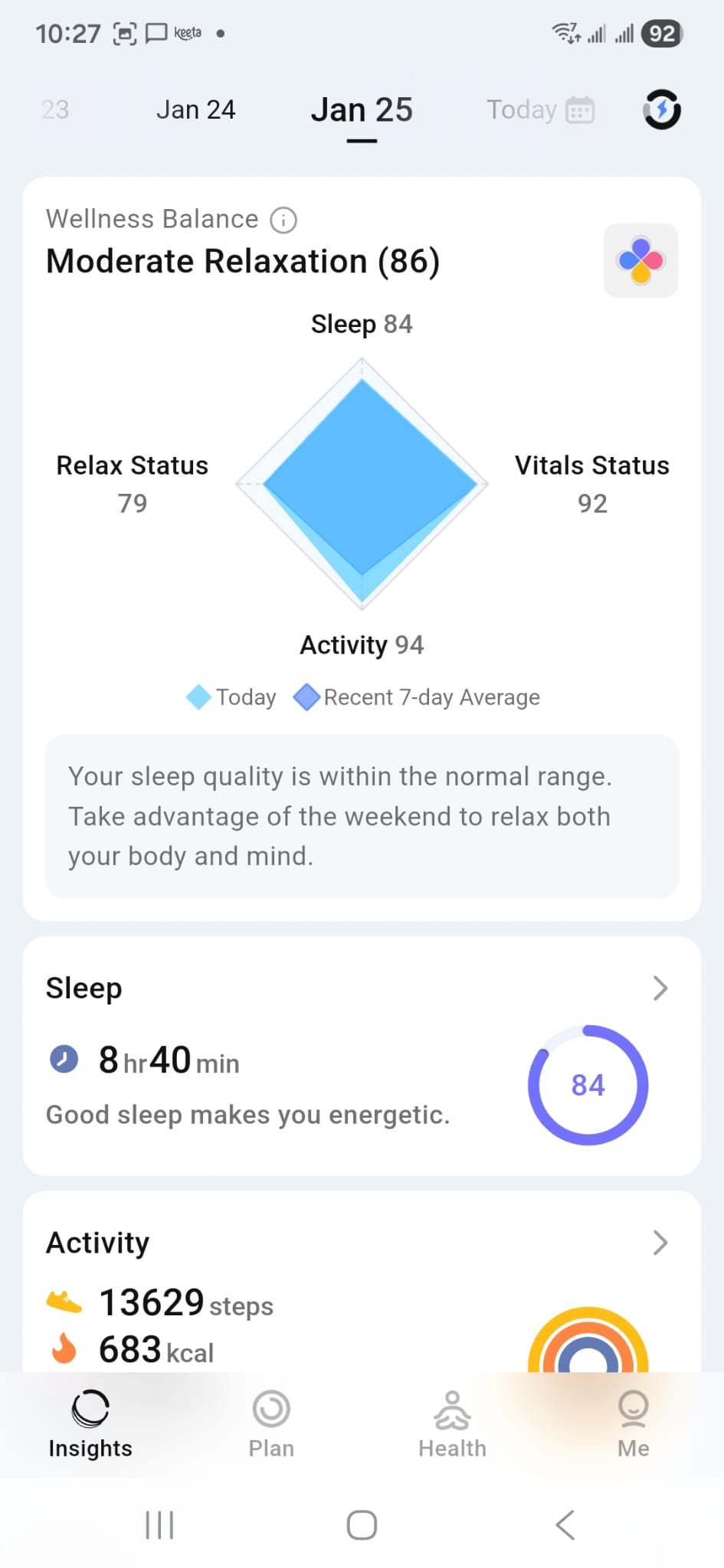
There is not much to say. RingConn focuses on stability and consistency rather than experimental features. The metrics are clear, the app avoids unnecessary noise, and the overall experience is easy to get into:
its excellent battery life, often lasting significantly longer than others
its reliable day-to-day metrics
its simple learning curve, making it a great entry point for first-time smart-ring users
its lightweight and comfortable design, which many reviewers say they forget they’re wearing
9. Clearing Up the Most Common Misconceptions
During my search of the best product, I’ve seen many claims about some brands. And I wanted to consider a full part of this article to answer some of the most controversial things I’ve seen online.
Myth: “Some of these companies are scam”
This is completely outdated. All four brands ship. I received my rings, they all work as expected (for now at least).
Myth: “Smart rings copy each other”
Ultimately, all of these devices are rings, and they all track vitals. But as I’ve described throughout this article, each company brings a very different philosophy, positioning, feature set, app user experience. These differences matter far more than people think.
After a few weeks of testing, I already have favorites and it’s becoming clear that software is what truly separates these rings in everyday use, far more than the hardware alone.
10. The Legal Fight
It's also important for me to include this topic, as it's something I've come across multiple times in my research. I believe it could help some people gain a clearer perspective. After all, when you invest in a product, it's reassuring to know the company behind it is here to stay and won't disappear on you.
It seems that the smart-ring industry is growing fast, and each company is innovating in a different direction which is ultimately good for consumers, However, one aspect that stood out during my research is how central intellectual property has become in this space. Oura, in particular, holds a substantial portfolio of patents covering smart ring design, sensors, algorithms, and user interface. Over the past few years, Oura has filed multiple patent lawsuits against competing smart ring companies.
Based on public information:
Circular has announced a license agreement with Oura, meaning both companies reached a formal settlement or cross-license that allows Circular to operate without legal uncertainty.
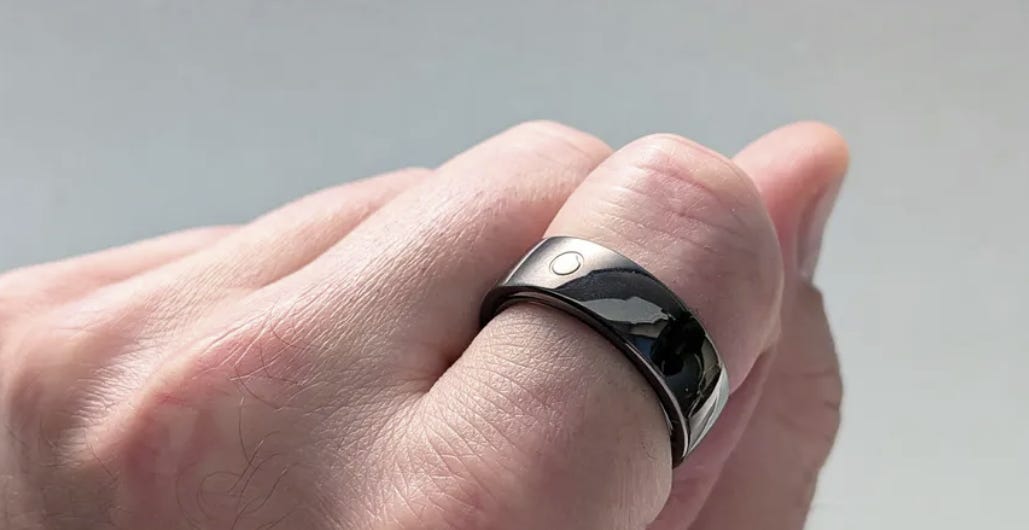
RingConn also publicly stated that they entered into a license agreement with Oura.
As of the time I’m writing this article, I don’t know whether Ultrahuman has reached any agreement. I couldn’t find confirmed, up-to-date information stating that a licensing deal exists. What I see is that Ultrahuman is currently banned from importing or selling its smart rings in the USA. In late 2025, Ultrahuman filed its own patent infringement suit against Oura in the Delhi High Court. Ultrahuman claims Oura's "Ring 4" actually steals Ultrahuman’s intellectual property regarding women's health and metabolic tracking.
11. My Long-Term Testing Plan
This article is just the starting point. I’ll be continuously testing all the rings, diving deep into their data and features. Each product will receive its own hands-on review, which I’ll link under this main article. I’ll also publish regular updates to track improvements and changes across the apps over time.